
When you're dealing with official paperwork for immigration, school, or legal matters, seeing terms like 'notary translation' can be confusing. Your first instinct might be to search online for a "notary translation near me." But what you often need for U.S. official purposes is something different—and usually much simpler. The key is understanding that for most situations, especially for U.S. Citizenship and Immigration Services (USCIS), a certified translation is what truly matters.
What Official Bodies Like USCIS Actually Require
Imagine Maria and her family preparing their Green Card application. They have birth certificates and marriage certificates—key civil certificates—from their home country. They believe they must get these documents translated and then take them to a Notary Public for an official stamp. This is a common mistake that can lead to unnecessary delays, stress, and extra costs.
What Maria quickly learns is that USCIS, the U.S. government agency that handles immigration cases, does not require translations to be notarized. What they do demand is a certified translation. Getting this right from the start saves applicants from wasting time and money on a step that isn't needed for their citizenship case.
Certified vs. Notarized Translations: A Simple Explanation
So, what's the actual difference? It's much simpler than it sounds.
A certified translation is a translated document accompanied by a signed statement from the translator or translation company. This statement, often called a "Certificate of Translation Accuracy," is a formal promise that the translation is a complete and accurate version of the original document. The translator is putting their professional reputation on the line to guarantee the quality of the work. This is the standard for most official U.S. purposes, including translating an academic transcript for university admissions or a legal contract for court.
A notarized translation, on the other hand, involves a Notary Public. The notary's job is not to check the translation's quality but to watch the translator sign the certificate and then apply a notary stamp. This stamp only verifies the identity of the person who signed the certification letter; it says nothing about the translation itself.
For U.S. immigration, academic, and most legal paperwork, the translator’s signed certification is the key requirement. The notary simply confirms who signed the paper, not the accuracy of the translation.
To make it even clearer, here’s a quick comparison.
Certified vs. Notarized Translation at a Glance
| Feature | Certified Translation | Notarized Translation |
|---|---|---|
| Purpose | Guarantees the translation is accurate and complete. | Verifies the identity of the person who signed the certificate. |
| Who Signs It? | A professional translator or translation company representative. | The translator signs in front of a Notary Public. |
| What It Guarantees | The translation is a true and accurate copy of the original. | The signature on the certification is authentic. |
| USCIS Requirement? | Yes, this is the standard. | No, not typically required. |
Ultimately, a certified translation is about the quality of the work, while a notarized translation is about the identity of the signer.
The USCIS Standard
For agencies like USCIS, accountability is everything. They need assurance that a competent professional stands behind the accuracy of the translated document. A signed certification provides exactly that.
Adding a notary stamp doesn't improve the translation's quality, which is why it's not a standard requirement for federal immigration cases in 2025 or 2026. This is especially true for vital records. You can learn more about the specific requirements for a birth certificate translation to ensure you get exactly what you need without paying for unnecessary extras. Understanding this distinction is the first step toward a smooth, stress-free application process.
Understanding Certified and Notarized Translations in a Nutshell
When your search for a "notary translation near me" brings up confusing terms, it helps to use a simple analogy.
Imagine a certified translation is like a promise from an expert chef. They translate your document—the recipe—and give it to you with a signed statement. This statement is their personal guarantee that the recipe is complete and accurate. The chef is vouching for every single word with their professional reputation.
Now, a notarized translation is like having an official witness watch the chef sign that recipe card. This witness, a Notary Public, applies their stamp to confirm one thing: the person signing is who they claim to be. The notary isn't a food critic; they haven't tasted the dish or checked the ingredients. They are only verifying the chef's identity.
The key takeaway: a certified translation guarantees the accuracy of the content, while a notarized translation simply verifies the identity of the person who signed it. For most U.S. federal agencies like USCIS, it's the chef's promise (the certification) that really counts.
What Makes a Certification Letter Official?
That "promise" from the translator is a formal document called a Certificate of Translation Accuracy, and it’s the backbone of any official translation. To be accepted by authorities, this letter must include specific information.
A proper certification letter will always contain:
- A Statement of Accuracy: A clear declaration that the translation is a complete and precise version of the original document.
- Translator’s Credentials: The name, signature, and contact information of the translator or an official from the translation company.
- Date of Translation: The date the translation was completed and certified.
- Document Identification: The name of the document and the languages involved (e.g., from Spanish to English).
This letter serves as a legal record, holding the translator or their agency accountable. Knowing what to look for helps you ensure your documents are prepared correctly the first time.
The Notarization Process Explained
Notarization is a separate, additional step that happens after the certification letter is prepared. The translator takes the signed certification letter to a Notary Public. In the notary's presence, they sign the document again or confirm that the existing signature is theirs.
The Notary Public then:
- Checks the signer's government-issued ID to confirm their identity.
- Watches them sign the document.
- Applies their official stamp or seal.
It’s crucial to remember that the notary’s seal does not endorse the translation's quality. It only adds a layer of fraud prevention by authenticating the signature. For a deeper dive into these distinctions, explore this complete guide to certified and notarized translation.
When dealing with official documents, especially when using third-party services, compliance is key. Following an outsourcing legal and compliance checklist can help you cover all your bases. This knowledge empowers you to get exactly what your application requires without wasting money on services you don't need.
When Is a Notarized Translation Actually Required?
Let's clear up one of the biggest misconceptions. When people search for a "notary translation near me," they often assume notarization is a mandatory step for official documents. For U.S. immigration, this is a costly assumption.
The truth is, USCIS does not require notarization. A certified translation is what you need. So, when is that extra notary stamp necessary? Only in specific situations, and knowing the difference will save you time, money, and stress.
This flowchart breaks down the decision-making process.
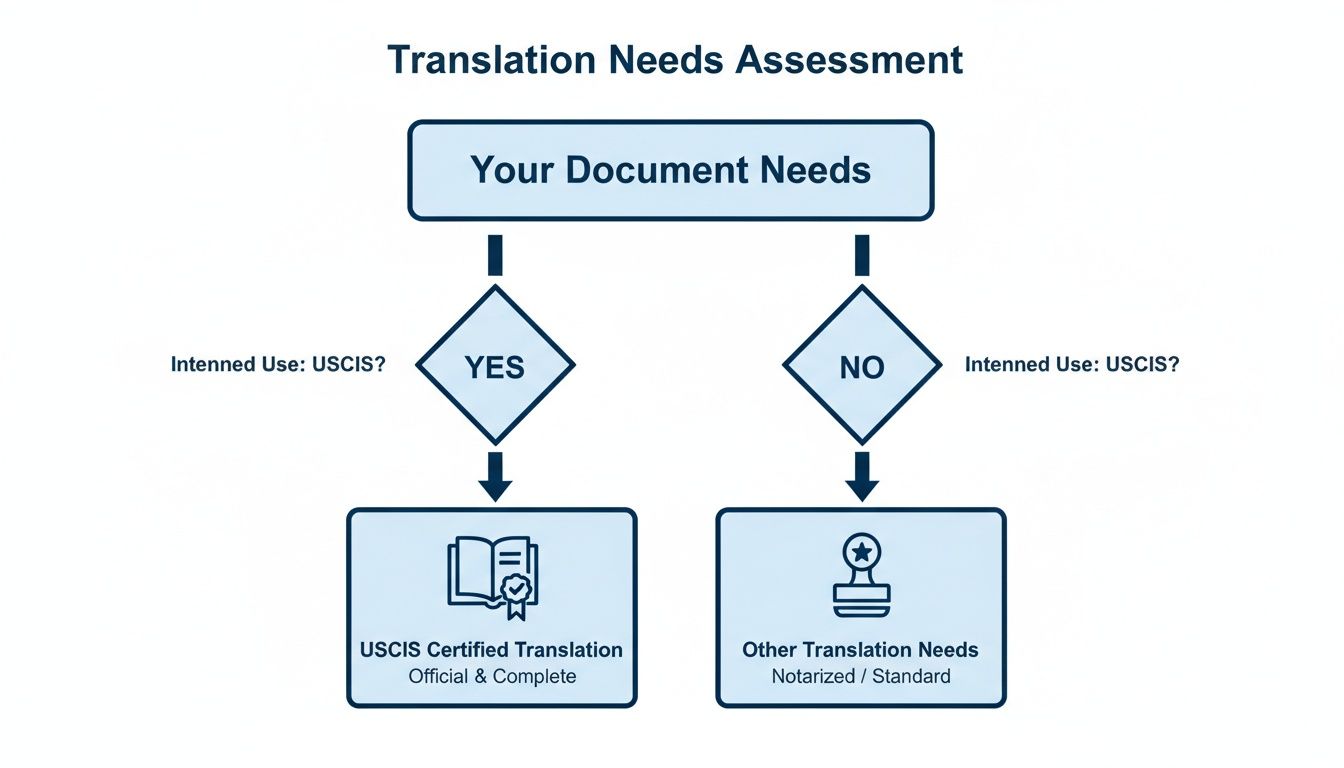
As you can see, the path for USCIS applications leads directly to certified translation. Notarization is a detour reserved for other, less common requests.
Real-World Scenarios Demanding Notarization
So, what are those special cases? The request for a notarized translation almost always comes from an institution outside the U.S. federal system, like a foreign government or a local court with specific rules.
Here are a few practical examples:
- International Academic Applications: A university in Spain might require notarized translations of your U.S. academic transcripts. This is tied to their country's legal process for validating foreign degrees.
- Foreign Embassies or Consulates: Let's say you're in the U.S. applying for a work visa to France. The French consulate might require your translated birth certificate to be notarized. They operate under their own country's laws, not U.S. federal guidelines.
- Certain Local Courts: While uncommon, a specific local court might have a unique rule requiring a notarized translator's signature on evidence submitted to them, adding an extra layer of identity verification.
- Sworn Translations: In some countries (like the Netherlands or France), a "sworn translator" is appointed by a court and their translations are considered legally equivalent to the original. This is different from both U.S. certification and notarization and is typically only needed for foreign legal systems.
How to Confirm Your Document Requirements
Before paying for notarization, you must be certain you need it. Don't guess.
The golden rule: the organization that requested the document sets the rules. Always check their official submission guidelines first.
If the instructions do not explicitly state "notarized," you can be confident that a standard certified translation is sufficient.
For anyone submitting documents for U.S. immigration, staying informed is critical. You can always check the official USCIS requirements for translated documents to get it right the first time. Verifying what you need upfront saves you from unnecessary fees and frustrating delays, keeping your application on track.
The Hidden Headaches of Finding Local Notary Translation Services

Searching for a "notary translation near me" seems simple, but it often leads to a frustrating and time-consuming process. The core problem is that a professional translator and a Notary Public are almost never the same person. This means you aren't just looking for one expert; you're trying to coordinate the schedules and locations of two separate professionals.
This two-step process can quickly become a logistical nightmare. You end up juggling appointments, driving across town, and paying two different bills for what should be a single, streamlined service. The ordeal consumes precious time and adds more stress to an already high-stakes situation, like meeting a USCIS deadline.
A Familiar Story of Missed Deadlines
Consider this common scenario: an applicant is rushing to submit their citizenship case. They find a translator for their foreign police clearance certificate. Then, they have to locate a Notary Public and arrange a time for both themselves and the translator to meet and sign the documents.
The inevitable happens: their schedules clash. The notary is only available when the translator is busy with other clients, leading to a three-day delay.
That delay—caused entirely by scheduling conflicts—almost made them miss their USCIS submission deadline. It’s a perfect example of how the traditional "near me" approach adds unnecessary friction, cost, and risk to a process that needs to be fast and simple.
This situation happens all the time, highlighting the flaws of the local model. The time spent coordinating meetings is time that could be better used preparing your application. The process itself becomes another source of stress, which is the last thing anyone needs when dealing with important paperwork.
The Modern Solution: Online Certified Translation Services
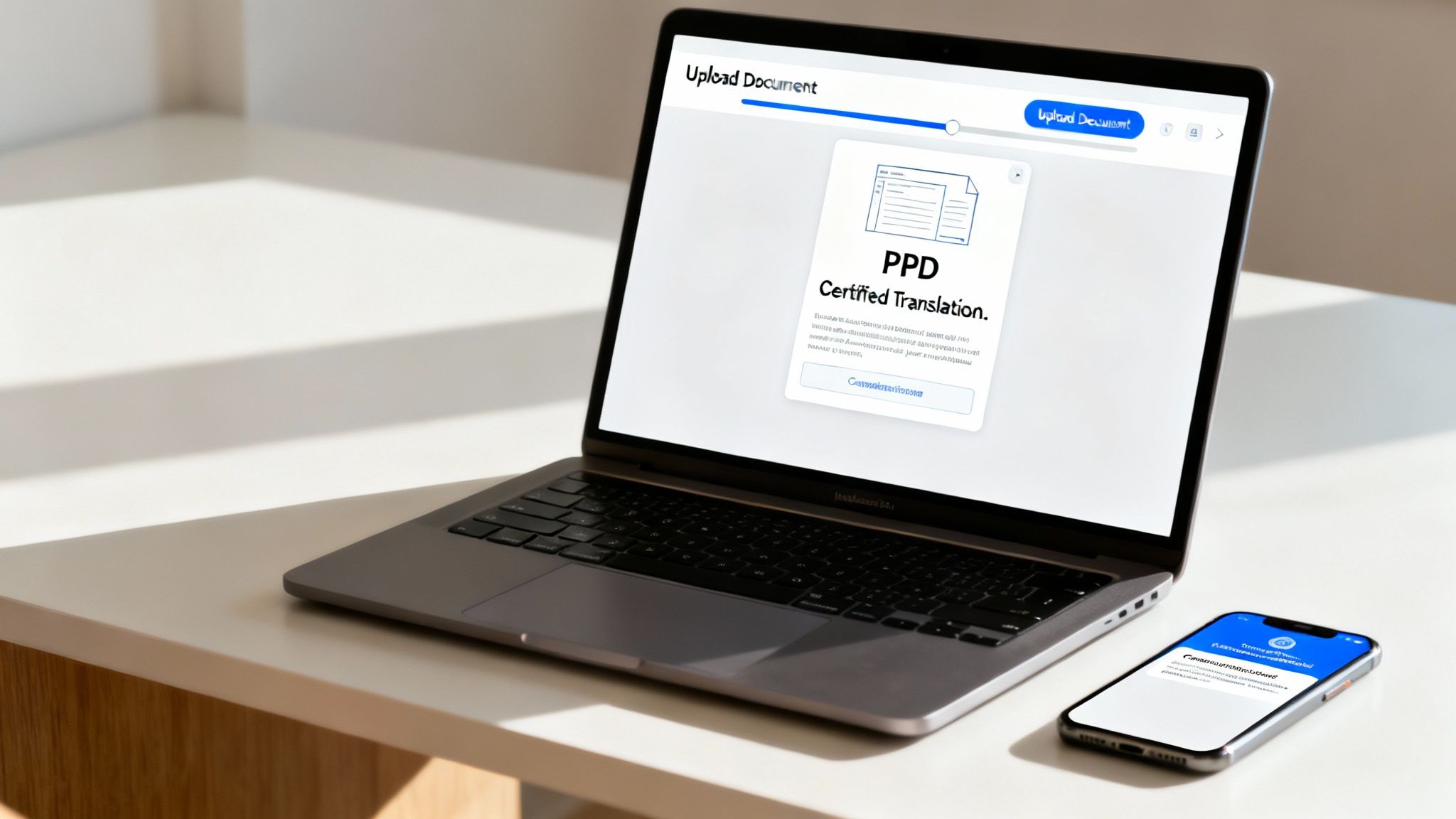
Forget the local runaround. The frustrating search for a "notary translation near me" is becoming obsolete. Today, specialized online translation agencies offer a smarter, more reliable, and less stressful alternative. This modern approach is designed to fix everything that makes the old process so difficult.
Services like TranslateDay focus on providing USCIS-accepted certified translations with incredible speed and convenience. The entire process is refreshingly simple and can be completed from your home, saving you the headache of juggling appointments.
How the Online Process Works: A Practical Guide
The beauty of the online model is its simplicity. Instead of driving around town, you follow a few easy steps on your computer or phone to get exactly what you need, fast.
- Upload Your Document: Securely upload a digital copy of your document. This can be a PDF, a Word file, or even a clear photo from your phone.
- Get an Instant Quote: The price is displayed immediately—no hidden fees or surprise charges. You get full pricing clarity before you commit.
- Receive Your Certified Translation: A professional human translator gets to work, and you receive the final certified translation by email, often within 24 hours.
This eliminates the need for any in-person meetings, making it a lifesaver for tight deadlines and busy schedules.
Key Benefits of Choosing an Online Service
Switching to an online provider isn't just about convenience; it's a strategic move that gives you an advantage when handling official paperwork. The global translation industry is booming, projected to be worth over USD 1.18 trillion by 2035. This growth is fueled by a massive shift to cloud-based services. You can explore the full market research from Research Nester to see the data behind this trend.
Here’s what this means for you:
- Unmatched Speed: Need a translation for an urgent USCIS deadline? You can get it in as little as 24 hours.
- Total Convenience: Manage the entire process from your home or office. No travel, no waiting.
- Guaranteed Acceptance: Reputable services guarantee acceptance for U.S. official purposes, giving you complete peace of mind. Check out our main certified translation service page for a full overview.
- Transparent Pricing: You’ll know the exact cost from the start. Our pricing and turnaround information page provides an instant quote so you understand the investment upfront.
By eliminating the friction of the traditional local model, online services have become the clear choice for anyone needing reliable translations for their immigration and USCIS applications, academic records, or legal documents.
Why Online Translations Are a Smarter Choice in 2026
In 2026, if you need an official document translated, turning to a professional online service isn't just an option—it's the smartest move you can make. The old routine of searching for a "notary translation near me" is a thing of the past. Digital providers offer a faster, more secure, and more accurate solution.
This shift is happening for good reason, especially when the stakes are high.
For someone applying for a Green Card, using a dedicated online service provides peace of mind. You get a translation with guaranteed USCIS acceptance from experts who understand the latest government requirements. This eliminates the guesswork and avoids the devastating risk of rejection due to a paperwork error.
It's the same for legal professionals. They rely on online services for confidentiality and the meticulous accuracy needed for court documents. If you're a student applying to a university abroad, a professional service ensures your academic transcripts are translated perfectly, preventing delays with your admission.
The Market Proves the Shift Is Here to Stay
The need for high-quality certified translations has exploded, especially in the legal and immigration sectors. The numbers confirm it.
The judicial segment of the translation market is expected to capture over 25.5% of the total market share by 2035, showing the high demand for specialized, accurate legal language. We also saw a massive surge in demand for healthcare translations for medical reports and patient records, a trend that remains strong in areas like immigration and telemedicine.
For your most critical documents—from medical reports to marriage certificates—a professional online service is no longer just a convenient option. It’s the most logical and secure choice.
While our focus is on written documents, it's interesting to see how technology is improving language access everywhere. The development of remote interpretation tools for legal nonprofits shows how digital platforms are breaking down communication barriers in real-time.
By choosing an online translation provider, you’re not just getting a document translated. You’re tapping into a secure, efficient system designed for the demands of 2026 and beyond.
Still Have Questions? Your Common Concerns Addressed
Even with the main differences explained, a few common questions always come up. Let's tackle them directly so you can move forward with confidence.
Does USCIS Really Need My Translation to Be Notarized?
Plain and simple: no. For 2025 and into 2026, the official USCIS requirements are clear. They require a certified translation, not a notarized one.
This means you need a formal statement from the translator or translation company vouching for their competence and the accuracy of the work. Paying extra for a notary stamp on a USCIS submission is a waste of money.
Can I Translate My Own Birth Certificate to Save Money?
It’s tempting, but you should never translate your own documents for any official purpose. Whether it's a birth certificate, an academic transcript, or a legal contract, you are an involved party. This creates a clear conflict of interest in the eyes of any official body, including USCIS. Your submission will almost certainly be rejected.
A notary only verifies the identity of the person signing; they don't check the translation itself. Therefore, having a notary witness your own signature on a translation you did is meaningless. Always use a professional, impartial third-party service.
The Bottom Line: A professional service is your guarantee against conflicts of interest. It ensures your translated documents, from civil certificates to legal paperwork, are accepted without issues.
How Much Should a Certified Translation Cost?
Pricing can vary widely with local, independent translators, often making budgeting difficult. This is where reputable online providers stand out. They typically offer clear, flat-rate pricing. For instance, you’ll often see a set fee per page for standard documents like a marriage certificate or birth certificate. You know the full cost upfront, with no surprise fees.
What is the Expected Turnaround Time?
When you're facing a deadline, speed is critical. Finding a local provider, getting a quote, and waiting for the work to be done can easily take days, if not weeks.
Online services have a major advantage here. Many can deliver a fully certified translation of a standard one or two-page document in as little as 24 hours. This rapid turnaround is a lifesaver for urgent immigration, academic, or legal timelines.
Ready to get your documents translated correctly and quickly, without the hassle? TranslateDay provides fast, USCIS-accepted certified translations that give you the confidence to move forward.


