
If you're applying to a university abroad or navigating an immigration process, you'll quickly find that your academic records need to speak the local language. This is where transcript translation services come in. They provide a professional, certified translation of your academic documents, making them officially recognized by authorities like universities or U.S. Citizenship and Immigration Services (USCIS).
Think of your diploma and grades as your academic passport. To use it in another country, it must be officially translated into the local language. For any official purpose—like a Green Card application or a Master's degree admission—this translation must be certified. This isn't just a suggestion; it's a strict requirement.
Unlocking Global Opportunities
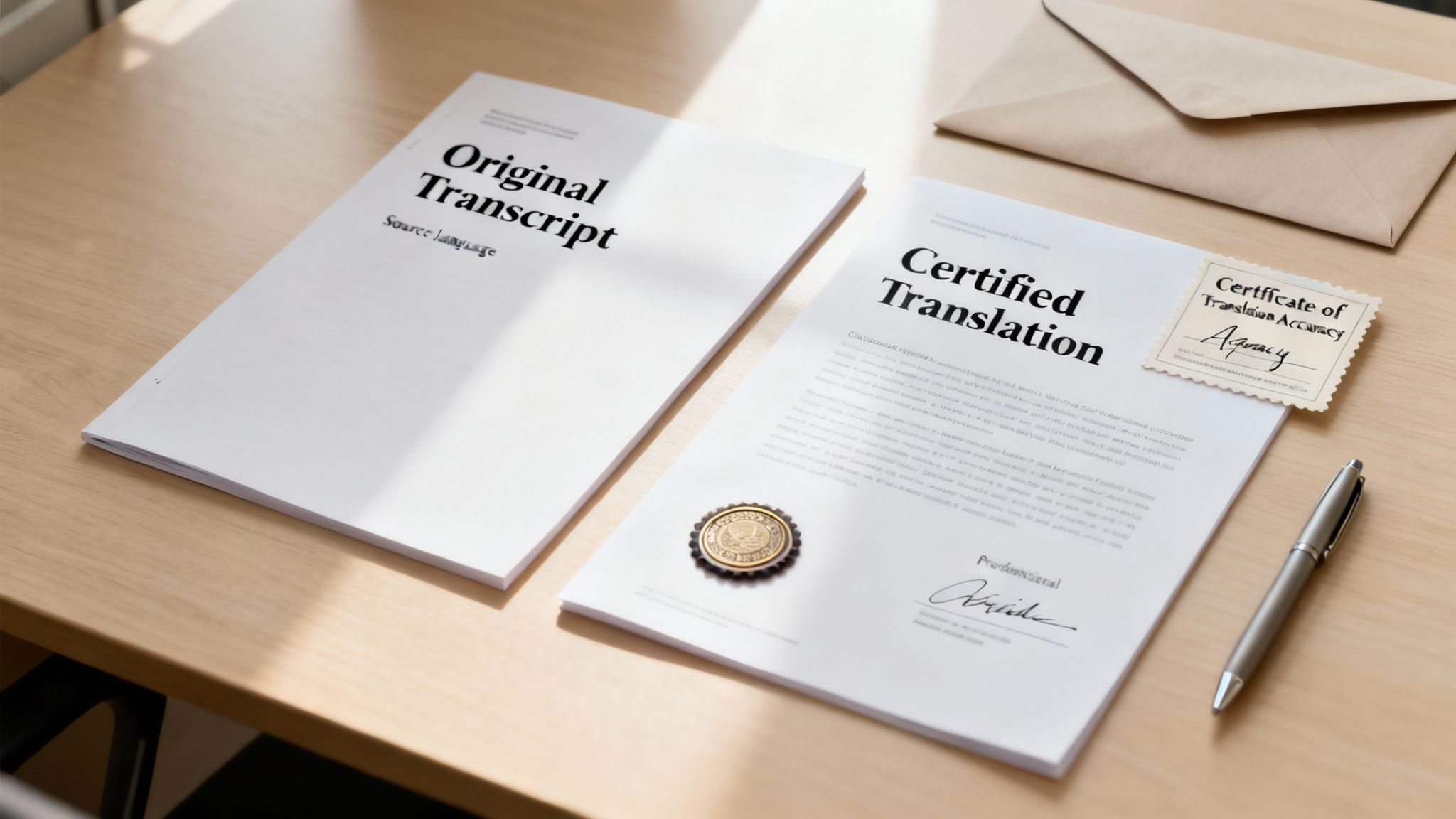
Imagine Maria, a recent engineering graduate from a top university in Mexico, who has her sights set on a master's program in the United States. Her transcript, detailing every course, credit, and grade, is entirely in Spanish. An American admissions officer can't evaluate it. This is the moment transcript translation services become essential.
A professional service does more than just switch words from Spanish (the source language) to English (the target language). They create a precise, mirror image of the original document, ensuring every academic detail and the original formatting are perfectly preserved. This makes it easy for the admissions team to understand and verify Maria’s qualifications.
Who Needs Transcript Translation? A Quick Overview
Anyone submitting foreign academic documents for an official purpose will need this service. It's often a critical step for some of life's biggest moves. Simply put, if your documents aren't in the official language of the organization you're sending them to, you’ll need a professional translation.
| User Profile | Primary Need | Common Documents | Key Requirement |
|---|---|---|---|
| International Students | University/College Admissions | Transcripts, Diplomas, Mark Sheets | Certified Translation for Evaluation |
| Immigrants & Visa Applicants | Immigration (e.g., USCIS) | Educational Records, Diplomas | Certified Translation for Eligibility Proof |
| Professionals & Job Seekers | Employment & Licensure | Degrees, Transcripts, Certifications | Verification by Employers or Credential Agencies |
This table covers the most common scenarios. For example, when applying for a Green Card, USCIS—the U.S. government agency handling immigration—requires certified translations of all foreign-language documents, including academic records that prove your eligibility.
More Than Just Words
A quality translation service ensures every detail is crystal clear. This means accurately translating course titles, clarifying different grading systems between countries, and, most importantly, certifying that the final document is 100% accurate.
For instance, a grade of "9.5" in Mexico is equivalent to an "A" in the U.S. A professional translator ensures this context is clear, preventing any confusion for admissions officers or immigration officials reviewing your case. A delayed application due to a misunderstood grade is an easily avoidable mistake.
A certified translation acts as your official academic passport. It’s a formal declaration by a professional translator that the translated document is a complete and accurate reflection of the original, making it valid for official use.
Ultimately, these services bridge your past academic achievements to your future global opportunities. Sometimes, you might need more than a translation. For documents used internationally, you might also need an apostille, which is a form of legal authentication. You can learn more about how translation and apostille services work together. The goal is a smooth submission, avoiding the frustrating delays that poor translations cause.
Understanding Certified vs. Standard Translation
Submitting the wrong type of translation is a common mistake that can bring your application to a screeching halt. When dealing with official documents like academic transcripts for immigration or university applications, you must understand the difference between a certified translation and a standard one. They are not interchangeable.
A standard translation simply changes words from one language to another. It might be fine for understanding an email from a friend, but for an official body like USCIS, it has no legal standing. It’s a rough draft, not the final, official version.
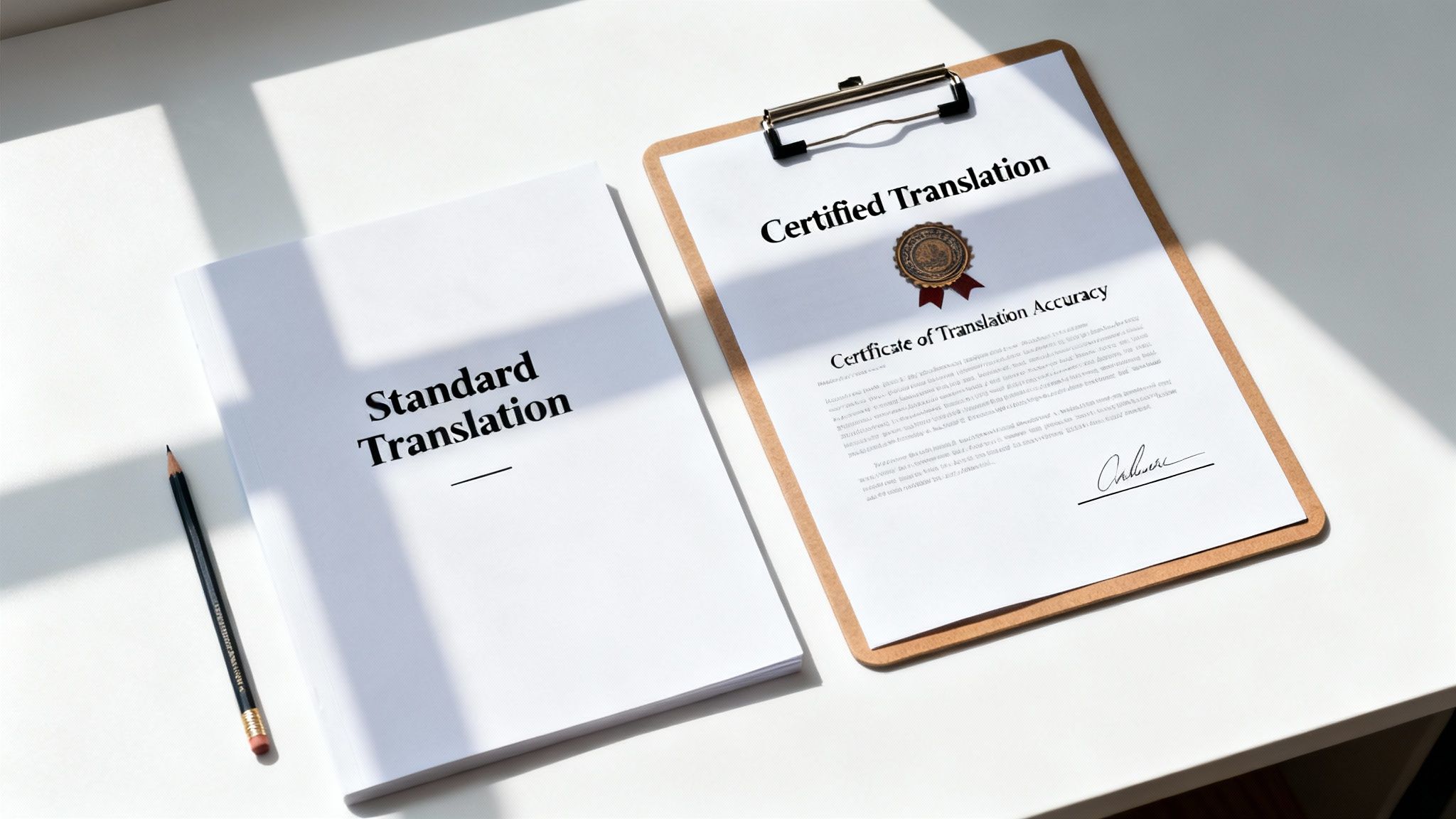
What Makes a Translation Certified?
A certified translation is a professional document with legal weight. It includes a signed statement from the translator or translation company called a Certificate of Translation Accuracy. This certificate is a formal declaration that confirms:
- The translator is fluent in both languages.
- The translation is a complete and accurate copy of the original document.
- The work was performed to the best of their professional ability.
This certificate is the seal of approval that organizations like USCIS and university admissions offices require. It makes your translated document official, so they can trust it without having to verify every word themselves. Our guide on how to get a certified translation explains this process in detail.
The need for official translations is growing rapidly. The global market for these services, especially transcript translation services, is projected to expand significantly by 2026, driven by rising international student enrollment and global migration.
Certified vs. Notarized: What You Need to Know
Another point of confusion is the difference between "certified" and "notarized." A notary stamp only verifies the identity of the person who signed the document; it says nothing about the translation's quality.
A notary’s stamp does not verify the accuracy of the translation itself. It only confirms that the signature on the Certificate of Accuracy is authentic.
While some institutions may require notarization in addition to certification, notarization alone is never enough. For example, USCIS does not require notarization, but it absolutely requires certification.
The Real-World Consequences of a Wrong Choice
Imagine this real-world scenario: Ahmed is applying for his Green Card and submits a standard, uncertified translation of his university diploma. Weeks later, he receives a Request for Evidence (RFE) from USCIS, a formal notice that his application is incomplete. This RFE delays his case by months, adding immense stress to the process.
Similarly, an international student applying to a U.S. university with a non-certified transcript translation will have their application put on hold. The admissions office cannot validate their grades. In both cases, the application is stalled due to an easily preventable error. This is why choosing a professional provider that guarantees certified translations is your first and most important step.
Your Step-by-Step Translation Checklist
Getting official documents translated can feel complicated, especially when your immigration status or university admission is on the line. This simple, practical checklist will guide you from gathering your transcripts to submitting the final certified translation with complete confidence.
Step 1: Get Your Documents in Order
This foundational step will save you from major headaches later.
- Gather Your Originals: Collect the official, original copies of all academic records you need translated: transcripts, diplomas, and any related certificates.
- Make High-Quality Digital Copies: Never mail your original documents. Instead, take clear scans or photos of every page. Ensure the entire document is visible, with no blurry text or shadows. Remember to capture both the front and back of each page.
- Final Completeness Check: Double-check that you've included every page. Transcripts often have a grading key or official seal on the back. Missing this small detail can get your translation rejected.
Step 2: Choose the Right Translation Partner
This is the most critical decision in the process. Not all translation services are created equal. You need an expert who understands the rules and guarantees their work.
When researching companies, look for a clear certified translation service page that explains what you're getting.
Look for a provider that explicitly guarantees 100% USCIS acceptance. This isn't just marketing language; it’s a firm promise that their documents meet the strict legal standards required for immigration and other official bodies.
Step 3: Submit Your Files Securely
Once you’ve chosen your provider, it's time to send them your documents. A legitimate service will offer a simple and secure upload process.
You will typically upload your digital files (scans or photos) through a secure portal on their website. This is much safer than emailing sensitive personal information. Make sure you upload everything and provide the necessary details, like your name and the source and target languages.
Step 4: The Translation and Certification Process
After you submit your files, the professionals take over.
Here’s what happens behind the scenes:
- Assignment to a Human Translator: Your files are given to a professional translator who is a native speaker of the target language and fluent in the original language.
- Translation and Formatting: The translator carefully converts the text, preserving the original layout as much as possible. They are familiar with academic terms and grading systems across different countries.
- Quality Check: A second linguist reviews the translation for accuracy, ensuring it’s a perfect match to the original.
- Certification: The agency prepares and signs the Certificate of Translation Accuracy, the official statement vouching for the translation's quality, and attaches it to your translated documents.
Step 5: Receive and Review Your Final Documents
The provider will email you a digital PDF of the translated document and the signed certificate. Before you submit it, take a moment to confirm a few key details:
- Check Names and Dates: Ensure all names, birthdates, and university names are spelled correctly.
- Verify All Pages are There: Confirm the translated document includes every page from your original file.
By following this checklist, you can avoid common mistakes. For more specifics on what government agencies require, review our detailed guide on USCIS translation requirements.
How to Choose the Right Translation Provider
Choosing the right partner for your transcript translation services is one of the most important decisions in your application process. A poor choice can lead to rejections, costly delays, and stress. The right partner makes the process seamless.
This isn’t about finding someone who can just swap words. It's about finding a provider who understands the high stakes and precision required for official documents. Submitting a transcript translated by a free online tool or a friend is like showing up to a legal proceeding with a document you wrote yourself—it simply won't be accepted.
The Non-Negotiables for Official Translations
When evaluating providers, look for these non-negotiable features. If a company is missing even one, it's a major red flag.
First, demand a 100% USCIS acceptance guarantee. This is a promise that their certified translations comply with the strict rules set by U.S. immigration. A provider confident enough to offer this knows the legal requirements inside and out.
Next, check for professional credentials. Membership in an organization like the American Translators Association (ATA) shows a commitment to industry ethics and quality standards. It's a clear sign you’re dealing with a legitimate agency.
Human Expertise vs. AI Tools
The temptation to use a free online translation tool is understandable, but for official documents, it’s a huge mistake. Automated tools cannot grasp the specific academic terminology or precise formatting required. Most importantly, an AI tool cannot provide the legally binding Certificate of Translation Accuracy that USCIS and universities demand. No exceptions.
Only a professional human translator can capture the necessary nuance and provide the official certification that ensures your documents are accepted. The demand for this human expertise is massive, with Europe alone accounting for nearly 49% of the global language services market, driven by complex academic and legal needs. You can explore more data on global translation trends on redokun.com.
The diagram below shows the simple, professional workflow you should expect.
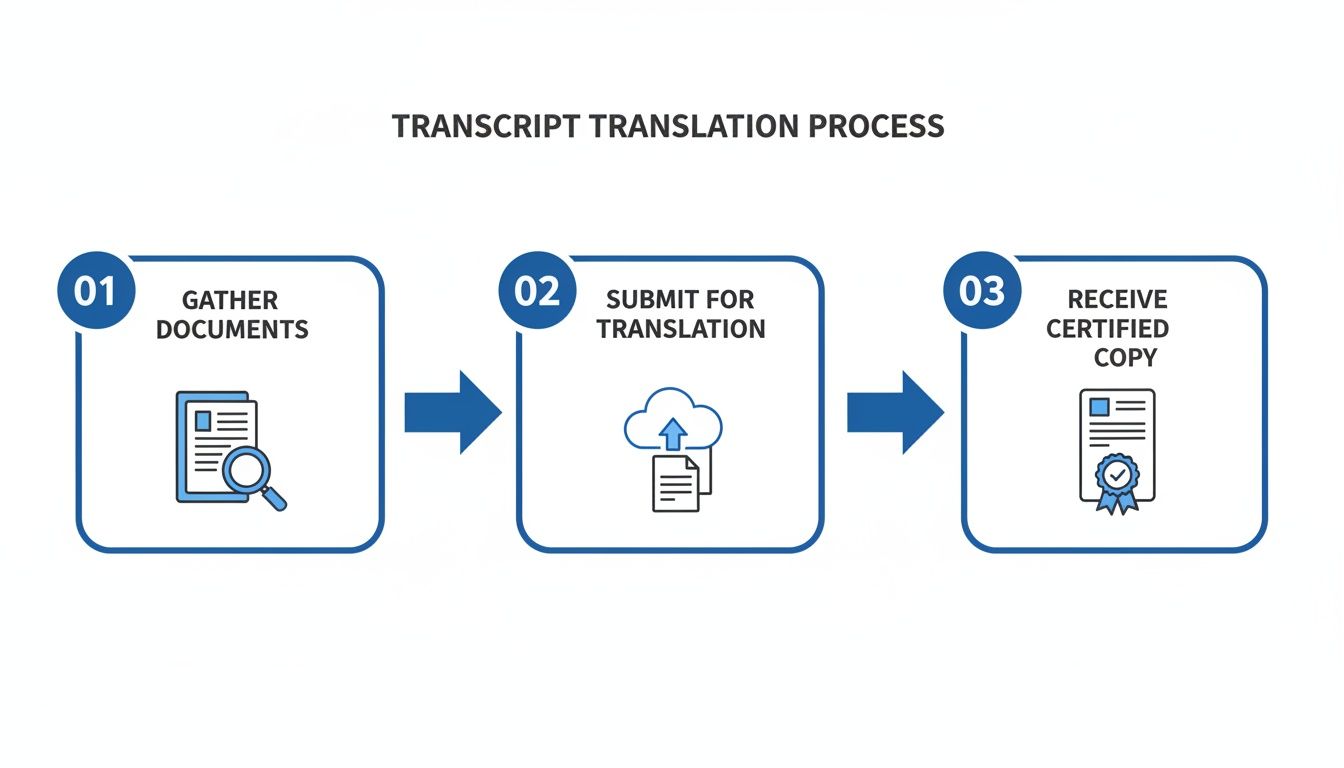
This clean, three-step process—gather, submit, and receive—is how it should be. A great service simplifies a complex task.
Evaluating Trust and Transparency
Beyond guarantees, look for signs of trustworthiness. A reputable company will offer straightforward, upfront pricing with no hidden fees. For example, our transparent pricing model ensures you know the full cost from the start.
Finally, consider these practical points:
- Secure Document Handling: Your transcripts contain sensitive data. Ensure the provider uses a secure online portal for uploads.
- Responsive Support: Can you easily reach a real person with questions? Good customer service is a sign of a company that cares.
- Verifiable Reviews: Look for genuine feedback from past customers, especially those who used the service for USCIS applications or university admissions.
Choosing the right provider gives you peace of mind, knowing your documents are in expert hands.
Getting a Handle on Pricing and Turnaround Times
The two biggest questions are always: "How much will this cost?" and "How quickly can I get it?" Understanding the answers is key to planning your budget and meeting deadlines without last-minute panic.
Most professional translation agencies charge a flat fee per page. This model is transparent, but it's important to clarify what counts as a "page." The industry standard is typically around 250 words. If your transcript has dense text, one physical page could count as two or more billable pages. Always confirm this to get an accurate quote.
How Much Should You Expect to Pay?
For a high-quality certified translation, expect a flat, per-page fee that is all-inclusive. This price should cover the translation, a quality check by a second linguist, and the official Certificate of Translation Accuracy.
Be wary of services with suspiciously low prices or those that add extra fees for certification. A professional service includes the cost of compliance in its standard rate. This ensures you receive a document guaranteed to be accepted by USCIS, with no surprise charges.
Paying for a professional certified translation is an investment in your application's success. A cheap translation that gets rejected will cost you far more in delays, fees, and stress than doing it right the first time.
Understanding Standard vs. Expedited Timelines
Turnaround time is just as critical as cost. For short documents of one to three pages, a standard turnaround is often within 24 hours. This speed is essential for meeting tight immigration and admissions deadlines.
The demand for reliable document translation is surging, with the market projected to grow significantly from 2026 to 2032 due to global migration and education trends. This has made fast, dependable services crucial. You can explore more data on document translation services market trends here.
For longer documents, the standard turnaround will naturally take more time. A good provider will give you a clear delivery estimate based on your page count. Our page on turnaround times provides more detail.
When to Choose Expedited Services
What if your deadline is tomorrow? This is where expedited or "rush" services are invaluable. For an additional fee, your project moves to the front of the line, guaranteeing the fastest possible delivery.
Standard vs. Expedited Translation: A Comparison
Choosing between standard and rush services is a balance of time and cost.
| Feature | Standard Service | Expedited Service |
|---|---|---|
| Typical Turnaround | 24-48 hours for short documents | Same-day or within a few hours |
| Cost | Standard per-page rate | Standard rate + rush fee |
| Best For | Standard application timelines | Urgent USCIS deadlines or last-minute submissions |
| Process | Follows the standard professional workflow | Prioritized workflow with dedicated resources |
The right choice depends on your situation. By getting a clear quote covering both cost and delivery, you can make an informed decision and ensure your translated documents arrive exactly when you need them.
Common Mistakes That Can Derail Your Application
A single mistake in the translation process can lead to frustrating delays or an outright rejection. When the stakes are this high, a small oversight can become a major problem. Let’s review the most common pitfalls so you can avoid them.
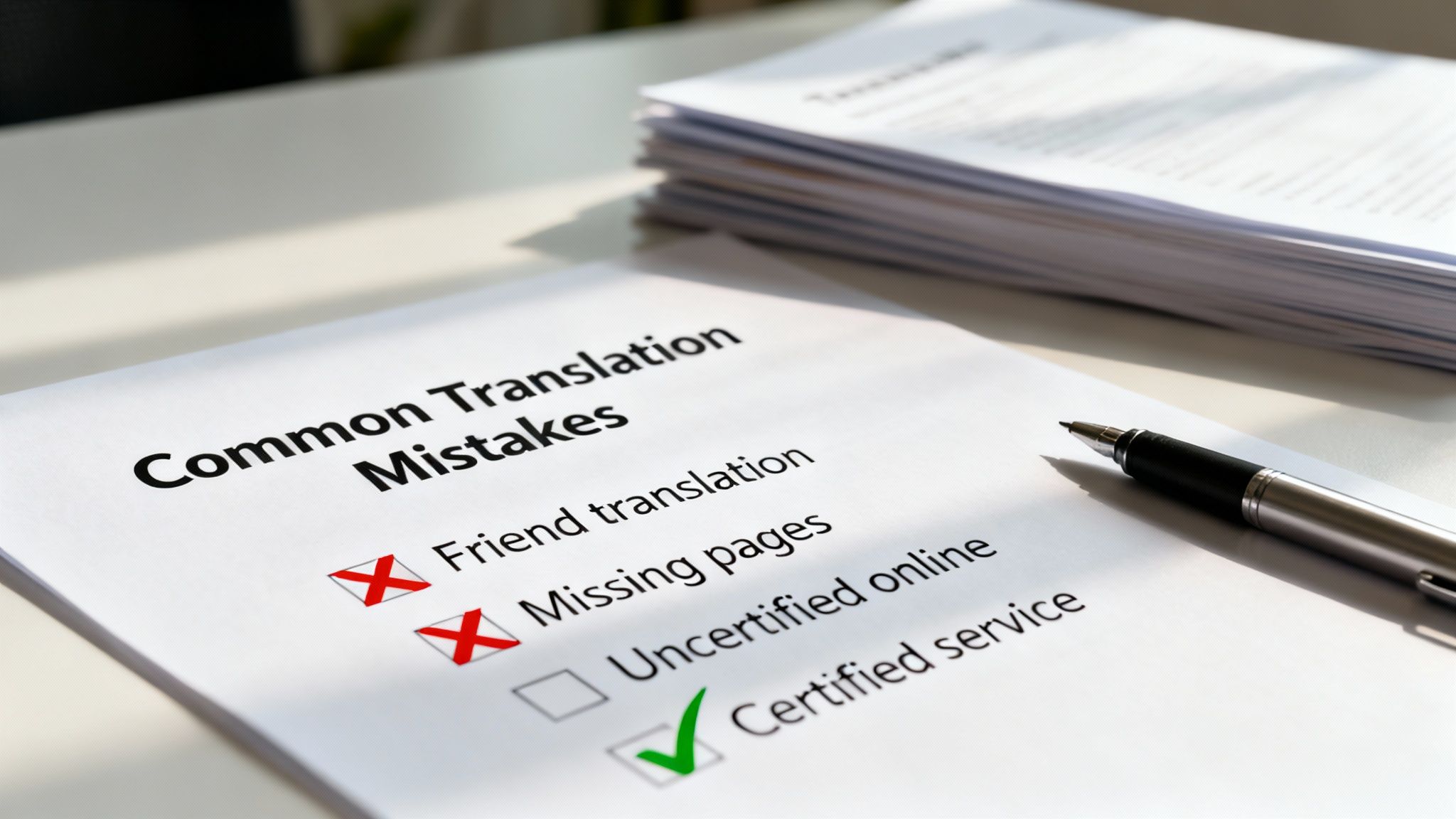
Think of your translated transcript as a key. If it has a single flaw, the lock won't turn.
Mistake 1: Using a Friend or Family Member
Asking a bilingual friend to handle your documents to save money is a critical error. Official bodies like USCIS strictly prohibit translations from anyone personally connected to the applicant. The reason is to prevent any conflict of interest and ensure the translation is impartial. A friend’s translation will not include the required Certificate of Translation Accuracy and will be rejected immediately. Our guide on USCIS translation requirements explains this rule in detail.
Mistake 2: Submitting Incomplete Documents
Another frequent mistake is uploading an incomplete scan of your original transcript. People often forget that transcripts can have crucial information on the back, like a grading key, course codes, or an official seal. Forgetting to scan both sides is a surefire way to have your application flagged. Before sending your files to a transcript translation services provider, double-check that every page, front and back, is included.
Mistake 3: Relying on Free Online Tools
Free automated translation tools are not suitable for official documents. They cannot grasp the nuanced terminology of academic records and, more importantly, they cannot provide the legally required certification.
Submitting a transcript translated by an AI tool is like sending a legal document without a signature—it has no official weight and will be dismissed by any serious institution.
Mistake 4: Forgetting to Review the Final Translation
Even professional translators are human. Before you submit the final translation, take five minutes to review it. Check for typos in critical details: your name, the university's name, and key dates. A simple spelling mistake can cause confusion and delays. This final check is your last line of defense to ensure a flawless submission.
Your Transcript Translation Questions, Answered
Navigating official paperwork for school or immigration can be confusing. Here are clear answers to the most common questions about transcript translation services.
Do I Have to Mail My Original Transcripts?
No, and you should never mail your original documents. A professional translation service uses a secure online portal where you can upload a clear scan or high-quality photo of your transcript. This keeps your original documents safe with you and speeds up the process.
Is a Translated Transcript the Same as a Diploma Translation?
No, they are two different documents. A transcript translation provides a detailed record of your academic history, listing every course and grade. A diploma translation simply confirms the degree you earned. For most university or immigration applications, you will need both, and each must be translated and certified separately.
How Does USCIS Actually Verify the Translation?
USCIS officers do not compare your translation to the original line by line. They verify the translation based on the Certificate of Translation Accuracy attached to it.
This certificate is a formal statement signed by the translation provider, confirming that the translation is complete and accurate. It serves as the official proof of validity. USCIS knows what a proper certificate looks like, which is why working with a service that guarantees acceptance is so important.
Will Evaluation Services Like WES Accept My Translation?
Yes, services like World Education Services (WES) and other credential evaluators require a certified translation for all foreign-language documents. However, they often have specific submission rules. Some may require special formatting or ask the translation agency to send the documents to them directly. Always check the latest guidelines on the evaluator’s website before ordering your translation to prevent any delays.
At TranslateDay, we specialize in fast, precise, and certified translations that come with a guarantee of acceptance by USCIS, universities, and credential evaluation services. Our professional translators handle your academic records with the care they deserve, so you can focus on your future.
Request a certified translation today and move forward with confidence.


