
Medical documents translation is the highly specialized process of converting sensitive health information from one language to another. This is far more than just swapping words; it’s a critical service that impacts patient safety, ensures legal compliance for agencies like U.S. Citizenship and Immigration Services (USCIS), and supports successful academic or professional applications. For anyone navigating immigration, legal cases, or international healthcare, understanding how to get a proper translation is essential.
Why Accurate Medical Translation Is Non-Negotiable
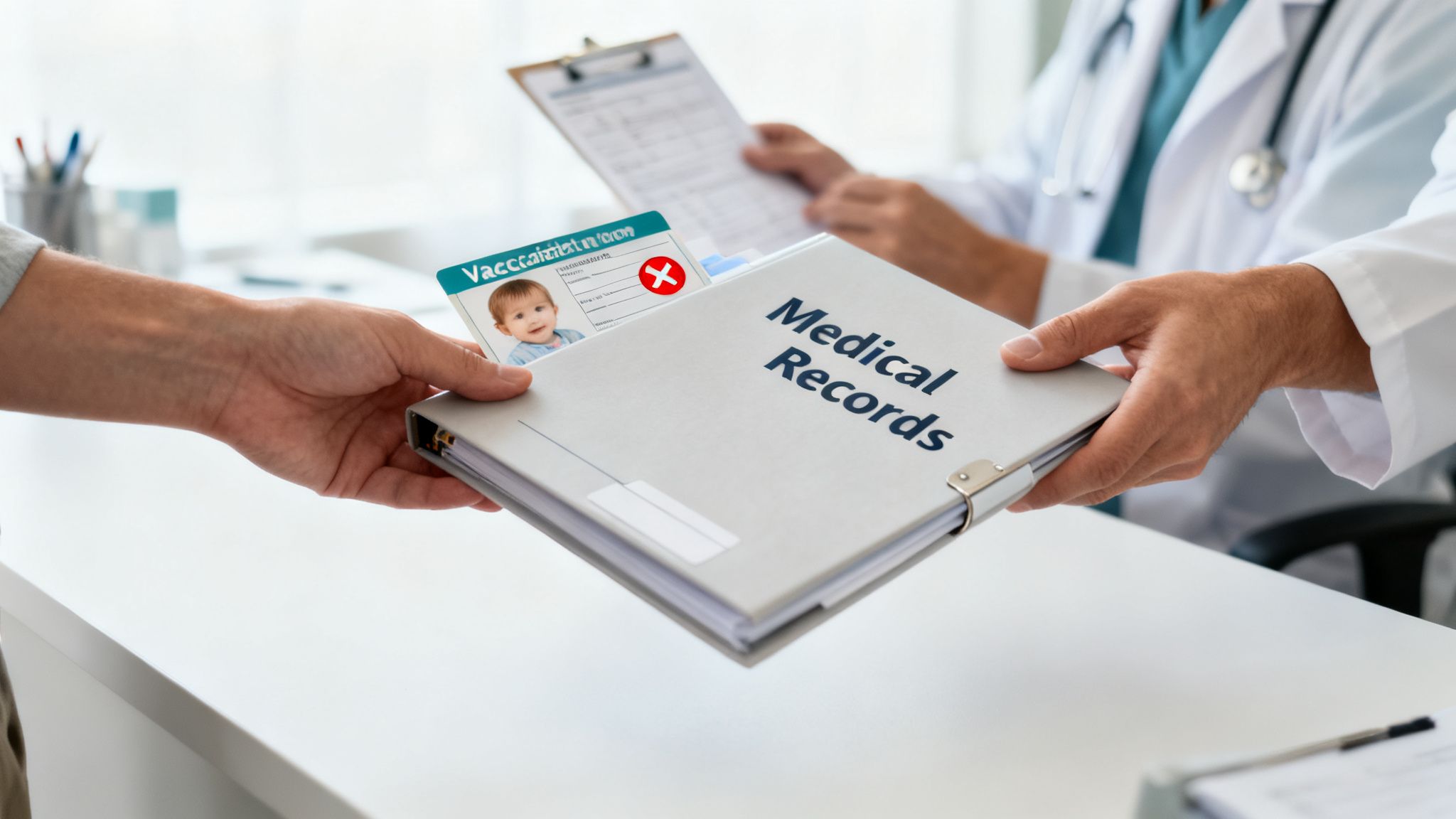
Imagine you’ve just moved to a new country and need to explain your child’s complex medical history to their new doctor. A small mistake in translating an allergy medication or a pre-existing condition could have serious, even life-threatening, consequences. This is precisely why professional medical document translation is so essential.
A minor error isn't just a typo. In this context, it can lead to a misdiagnosis, a denied insurance claim, or a major setback in an immigration case. For instance, when you're applying for a Green Card, USCIS requires certified translations of vaccination records and other medical exams. An unclear or inaccurate translation can cast doubt on your entire application, causing significant delays.
The High Stakes Of Inaccuracy
In medicine, precision is everything. The difference between "hypertension" (high blood pressure) and "hypotension" (low blood pressure) is just a single prefix, but the treatments are polar opposites. A machine or an inexperienced translator could easily miss this distinction, putting a patient's health directly at risk. Even outside of strictly medical terms, understanding the profound impact of cultural and contextual nuances in language translation is key to getting it right.
This is exactly why official bodies don't accept translations from friends, family, or generic online tools. They demand a certified translation, which is the professional standard that guarantees both accuracy and accountability.
A certified translation includes a signed statement from the translator or translation agency attesting that the translation is a complete and accurate representation of the original document. This certificate is the seal of approval that institutions like USCIS, courts, and universities demand.
The table below breaks down some common situations where these translations are not just helpful, but absolutely necessary.
Common Scenarios Requiring Medical Document Translation
| Scenario | Documents Needed | Why It's Critical |
|---|---|---|
| U.S. Immigration (USCIS) | Vaccination Records, Medical Exam Forms (I-693), Doctor's Notes | USCIS requires proof of medical admissibility. Inaccurate or uncertified translations will be rejected, delaying or jeopardizing your application. |
| Seeking Medical Care Abroad | Patient Histories, Lab Results, MRI/X-ray Reports, Prescriptions | To ensure continuity of care and prevent dangerous misdiagnoses. Your new doctor needs your full, accurate medical story. |
| Insurance Claims | Hospital Bills, Treatment Summaries, Medical Invoices | Insurance companies require precise documentation to process claims for treatment received in another country. Ambiguity leads to denials. |
| Legal Proceedings | Medical Expert Reports, Injury Assessments, Psychiatric Evaluations | For personal injury cases, disability claims, or workers' compensation, the court needs an exact understanding of medical evidence. |
| Academic/Professional Enrollment | Proof of Immunizations, Physical Exam Records | Universities and professional licensing boards often require medical clearances from your home country as part of their admission process. |
As you can see, the need for precision spans everything from personal health to legal and bureaucratic processes, where the smallest error can have significant consequences.
A Growing Global Need
The world is more connected than ever, and so is our healthcare. With the rise of telemedicine, global travel, and international clinical trials, more medical records are crossing borders than ever before. In 2020 alone, the demand for translation services in the healthcare sector jumped by 49% globally.
This trend is only accelerating as digital health records become the norm. For families navigating the U.S. immigration system or patients seeking care abroad, having a precise, professional translation of their health history isn't just a formality—it's a necessity.
Understanding Certified Versus Standard Translations
When you need a medical document translated for an official purpose, you might wonder if just any translation will do. The answer is a hard no. There's a world of difference between a simple standard translation and a formal certified translation, and knowing which one you need is the first step to getting your documents accepted.
Think of it like this: a standard translation is like asking a bilingual friend to tell you the gist of a foreign news article. It's great for understanding the main points, but it has zero official standing. You'd never submit that to a government agency.
A certified translation, on the other hand, is the official, verified version. It’s a meticulous, word-for-word rendering of the original document, backed by a professional who guarantees its accuracy.
What Makes a Translation "Certified"?
A certified translation is more than just a well-done translation; it’s a package deal. It always comes with a signed document called a Certificate of Translation Accuracy. This is the translator's formal, legally-binding statement attesting to a few key facts:
- The translation is a complete and accurate copy of the original document.
- The translator is fluent in both the source and target languages.
- The translation was performed by an impartial third party.
This certificate is the stamp of approval that institutions like USCIS, universities, and courts require. It elevates the translation from a simple text to an official record you can rely on. For organizations dealing with sensitive health information, this level of accountability is non-negotiable. You can learn more about certifications and standards in medical translation in our detailed guide.
The Role of Notarization: An Extra Layer of Formality
You'll sometimes hear about a notarized translation. This adds another layer of verification, but it’s crucial to know what it does—and what it doesn’t.
A notary public doesn't check the translation for accuracy. That’s not their job. A notary’s only role is to verify the identity of the person signing the Certificate of Translation Accuracy. They watch the translator sign, confirm their identity, and then affix their official stamp.
Key Takeaway: A certified translation vouches for the accuracy of the translation. A notarized translation vouches for the identity of the translator. USCIS doesn't require notarization, but some universities or foreign governments might. Always check the requirements of the receiving institution.
Real-World Scenarios: When Certification Is a Must
Let's look at a few common situations where this really matters:
Immigration Application: A woman from Brazil is applying for a Green Card and needs to submit her child's vaccination records. If she asks a friend to translate them, USCIS will reject the application flat-out. She absolutely needs a certified translation with a signed accuracy certificate to prove the records are authentic.
University Admission: A student from Germany is enrolling in a U.S. university. The admissions office needs a certified translation of his medical clearance form to ensure he meets the campus health and safety requirements before he can register for classes.
Legal Case: In a personal injury lawsuit, medical reports from a hospital in Mexico are key pieces of evidence. A U.S. court will only admit a certified translation, where every single medical term is translated with precision and is legally defensible.
In every one of these cases, a standard translation is useless. The formal guarantee that comes with a certified translation provides the accountability these institutions demand, making it the only option for any serious or official purpose.
What Kinds of Medical Documents Need Translation?
Whether you're dealing with immigration, continuing your medical care in a new country, or handling legal matters, you'll eventually run into the need for translated medical records. Knowing exactly which documents are required can save you a world of headaches and prevent serious delays. Let’s break down the most common records you’ll need to get translated based on your situation.
For Immigration and USCIS
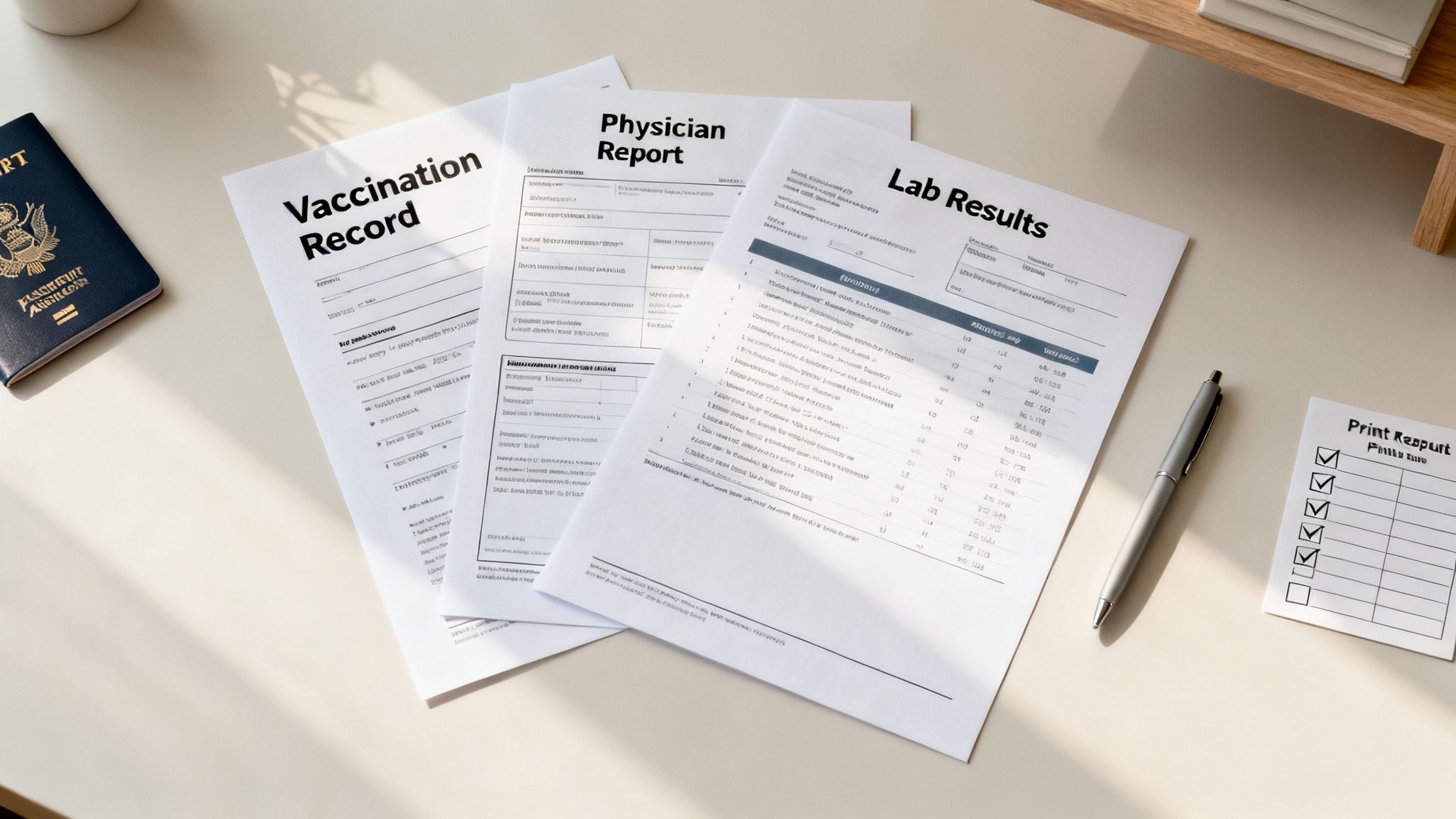
Applying for a Green Card, visa, or U.S. citizenship involves a ton of paperwork, and your medical history is a critical piece of the puzzle. U.S. Citizenship and Immigration Services (USCIS)—the government agency that handles immigration—is notoriously strict about its document requirements. If any of your records aren't in English, they must come with a complete, certified translation.
- Vaccination and Immunization Records: These are non-negotiable. They prove you meet the public health standards required for entry into the U.S. A certified translation makes sure every vaccine name and date is crystal clear.
- Physician’s Reports and Medical Examination Forms (Form I-693): Did a civil surgeon in your home country handle your medical exam? All their notes, diagnoses, and health assessments must be translated.
- Hospital Records: Any documents detailing past hospital stays, surgeries, or ongoing conditions need to be translated so USCIS can get a complete view of your health history.
Submitting these documents without a proper certified translation for USCIS is one of the quickest ways to get a Request for Evidence (RFE). That single mistake can stall your application for months.
For Continuing Healthcare and Insurance
Moving to a new country often means finding a new doctor. To give you the best (and safest) care, your new medical team needs to understand your entire health history. This is where accurate translation isn't just about bureaucracy—it's about your well-being.
- Patient Medical Histories: This is your complete health story—allergies, chronic conditions, past surgeries, you name it. A precise translation helps prevent a dangerous misdiagnosis.
- Laboratory and Pathology Results: Things like blood tests and biopsy reports are filled with technical jargon. A flawless translation is essential for your new doctor to interpret them correctly.
- Hospital Discharge Summaries: These crucial documents recap a hospital visit, outlining the diagnosis, treatments given, and instructions for follow-up care.
- Prescription Information: Getting the right medication and dosage is vital. A properly translated prescription prevents life-threatening errors.
This isn't a niche problem. The global translation services market was already valued at around $40 billion USD in 2024 and is projected to hit over $48 billion by 2026. With more than 25 million people in the U.S. alone having limited English skills, accurate medical translation is a daily necessity. Discover more insights on the translation industry’s growth.
For Legal and Employment Purposes
Medical records are often the backbone of legal cases and a standard part of many job applications. In these high-stakes situations, the translation has to be perfect and able to withstand intense legal scrutiny.
- Medical Expert Reports: In a personal injury or disability claim, these reports are everything. A certified translation ensures every single medical fact is conveyed accurately in court.
- Psychiatric and Psychological Evaluations: The language in these reports is incredibly nuanced. For custody disputes, asylum cases, or fitness-for-duty exams, an expert translator is a must.
- Physical Examination Results: Many jobs, particularly in public safety or transportation, require a physical. If you got yours done abroad, you'll need a certified translation for your potential employer.
Knowing which documents to translate is the first step. The next is making sure that translation meets the strict standards of whoever is asking for it. You can learn more about how our transparent pricing and turnaround times make this process simple and predictable.
How HIPAA Compliance Protects Your Private Health Information
Your medical records are more than just documents; they're a map of your personal health journey, filled with diagnoses, lab results, and treatment histories. When you need a medical documents translation, you’re not just handing over words—you're entrusting someone with incredibly sensitive information. This is precisely why the Health Insurance Portability and Accountability Act (HIPAA) is so important.
Think of a HIPAA-compliant translation service as a digital fortress for your documents. The law establishes strict federal standards for safeguarding your Protected Health Information (PHI). It ensures that only authorized professionals can access your files and legally binds them to keep every detail confidential.
What HIPAA Compliance Looks Like in Action
Choosing a HIPAA-compliant provider isn’t just about checking a box. It’s about ensuring your personal health details are handled with the same security and ethical care you’d expect from your doctor's office. This commitment to privacy is what separates a professional agency from risky, non-compliant options like free online translation tools, which offer absolutely no guarantee of confidentiality.
A truly compliant process has several critical layers of security built-in:
- Secure, Encrypted Platforms: From upload to delivery, your files travel through encrypted channels, locking out any unauthorized access along the way.
- Strict Access Controls: The circle of access is kept intentionally small. Typically, only the project manager and the assigned translator ever see your documents, which maintains a clear and secure chain of custody.
- Binding Non-Disclosure Agreements (NDAs): Every single translator signs a legally binding NDA, making them personally and professionally responsible for protecting the confidentiality of your information.
This secure framework is non-negotiable. For any organization handling multilingual health data, a detailed HIPAA compliance checklist is an invaluable tool for making sure every regulation is met.
The Dangers of Cutting Corners with Non-Compliant Services
The risks of using a non-compliant service are huge. Without these protections, your sensitive medical data could be left exposed on public servers, stored insecurely, or even sold. For both individuals and organizations, the fallout can be disastrous, leading to identity theft, insurance fraud, and steep legal penalties.
Crucial Takeaway: HIPAA compliance isn't an optional extra for medical document translation. It's the only way to guarantee your private health information is managed with the same legal and ethical gravity as it would be in a hospital or clinic.
Let’s put this in perspective. Say you’re a law firm managing a personal injury case with sensitive expert medical reports. Using a non-compliant translator could easily cause a data breach, shattering attorney-client privilege and putting the entire case at risk. Likewise, if you're submitting personal medical records for translation services for an immigration application, a security lapse could expose your private data to the world.
Ultimately, choosing a HIPAA-compliant agency means you don't have to sacrifice confidentiality for accuracy. It gives you the confidence of knowing that your private information will remain exactly that—private.
Your Step-by-Step Guide to Getting Documents Translated
Getting medical documents translated can feel overwhelming, especially with a tight deadline for a USCIS application or an urgent need to share health records. Let’s break down the process into simple, manageable steps so you can get it done right the first time without the guesswork.
Step 1: Prepare Your Documents
First things first, gather all the documents you need translated. The quality of your original file makes a huge difference in how quickly and accurately the translation can be done. Make sure every page is a clean, high-resolution copy where all the text, stamps, and signatures are easy to read.
No scanner? No problem. A modern smartphone can do the trick. Just lay the document on a flat surface in a well-lit room, avoid casting any shadows, and snap a clear picture from directly above. Most translation services are perfectly fine with high-quality JPG or PNG images, not just PDFs.
Step 2: Confirm the Requirements
Before you even think about ordering, you need to know exactly what the person or organization on the other end requires. For example, are you submitting vaccination records to USCIS? They’ll need a certified translation, but you won't need to get it notarized. Is the document for a court or university abroad? They might have stricter rules and ask for a notarized translation, which adds an extra verification step.
Pro Tip: The best way to avoid a headache is to ask. Check the official website of the receiving organization or give them a quick call. A five-minute conversation can save you from paying for a translation twice and prevent major delays.
Step 3: Select a Trusted Provider
This is the most important decision you'll make in the whole process. You want to find a translation partner who offers a solid acceptance guarantee, particularly for official submissions to places like USCIS. A trustworthy agency will be upfront about their process, security, and credentials, like being a member of the American Translators Association (ATA).
The demand for medical translation is only growing, thanks to telemedicine and the shift to digital health records. In fact, 92% of healthcare providers expect this demand to grow or stay the same in 2026. Yet, only a small fraction—19% of enterprises—trust AI for these critical documents. This highlights why proven human experts are still essential for accuracy and compliance. You can learn more about 2025 healthcare translation trends to see why professional services are so crucial.
A secure workflow is non-negotiable. The process should look something like this: a secure upload, expert translation, and secure delivery.
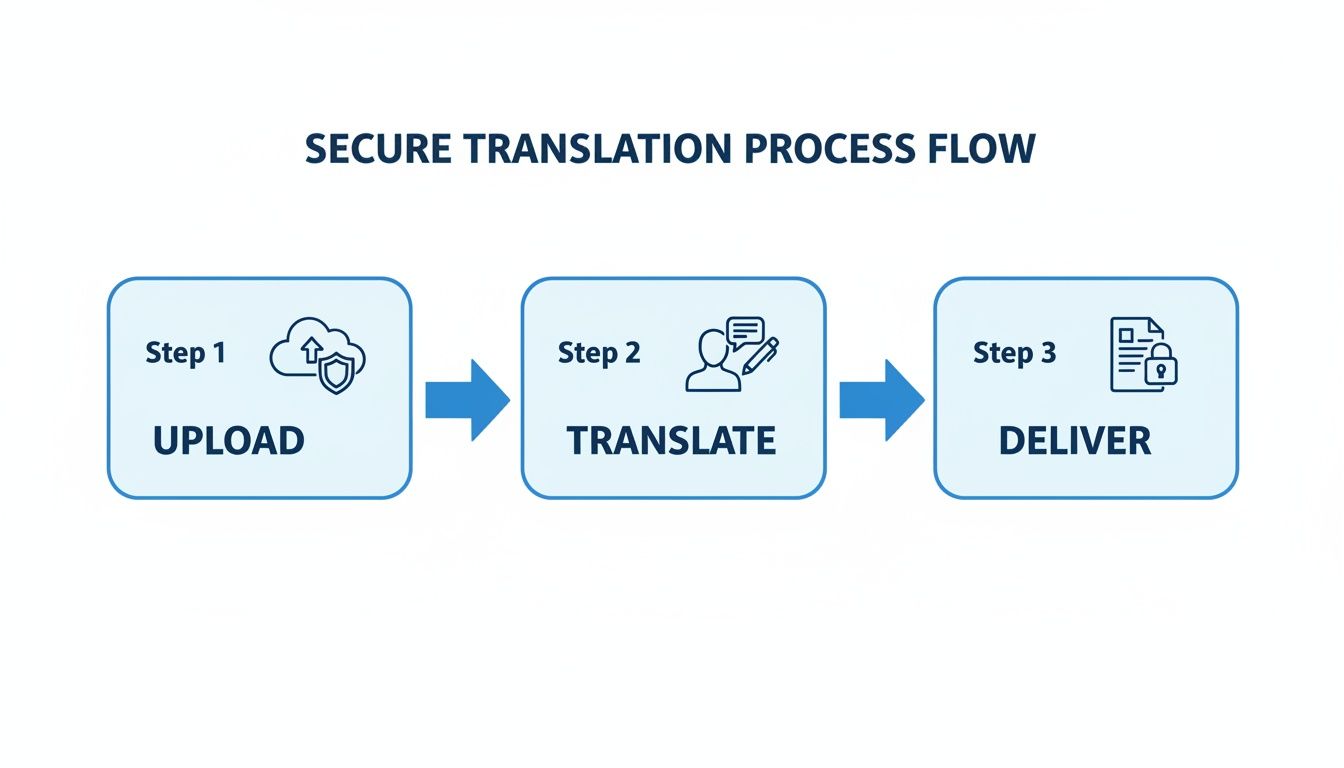
This kind of process ensures your sensitive medical information is protected every step of the way.
To help you stay on track, we've put together a handy checklist. Follow these steps to make sure your submission goes smoothly from start to finish.
Medical Translation Checklist For Official Submissions
| Step | Action Item | Key Consideration |
|---|---|---|
| Before You Order | Gather all documents and scan or photograph them clearly. | Legibility is key. Blurry text or cut-off edges can cause delays. |
| Before You Order | Contact the receiving institution to confirm their requirements. | Do they need a certified, notarized, or standard translation? Don't guess. |
| During the Order | Choose a provider with an acceptance guarantee and ATA membership. | Look for signs of credibility and a commitment to quality. |
| During the Order | Double-check the spelling of all names, dates, and locations. | Simple typos can create big problems with official submissions. |
| After You Order | Review the final translation and Certificate of Accuracy. | Ensure all names and numbers match the original. |
| Submission | Submit both the translated document and the certificate. | The certificate is your proof of professional translation. |
This checklist acts as your roadmap, ensuring you don't miss any critical details that could jeopardize your application or request.
Step 4: Request a Quote and Place Your Order
With a provider picked out, it's time to get a quote. You'll typically upload your documents through their secure online portal. This will generate a clear price and an estimated delivery time. Good services offer transparent pricing and turnaround information, often charging a flat rate per page, which keeps things simple.
When you're filling out the order form, be meticulous. Go over every detail, especially the spelling of names, dates of birth, and any specific locations mentioned in the document. Getting this right from the start helps the translator deliver a flawless document.
Step 5: Receive and Review Your Translation
For most standard documents of about 1-3 pages, you should get your certified translation back within 24 hours. When it arrives, you’ll typically receive two files:
- The Translated Document: This will be a file that mirrors the format and layout of your original.
- The Certificate of Accuracy: A separate page with a signed statement from the agency, confirming the translation is complete and accurate.
Give the translation one final look-over, paying close attention to the names and dates. Once you've confirmed everything is correct, you're all set to submit your documents with confidence.
Common Mistakes That Can Jeopardize Your Submission
When you're dealing with medical documents for official purposes, even a small hiccup can cause a major headache, like a long delay or a flat-out rejection of your application. Let's walk through some of the most common pitfalls so you can steer clear of them from the get-go.
One of the biggest mistakes people make is trying to cut corners by asking a bilingual friend or family member for a translation. It seems like an easy way to save money, but it's a non-starter for official bodies like USCIS. They require a translation that's not only accurate but also completely impartial. Any translation from someone you know is automatically seen as biased and will be rejected.
Using Unreliable Translation Methods
Another trap is turning to free online tools like Google Translate. They're great for figuring out a menu in a foreign language, but for complex medical documents? Absolutely not. These automated systems can easily mix up critical terms—think "hypertension" versus "hypotension"—creating errors that could have serious consequences.
Even worse, these tools come with zero confidentiality. The moment you upload your private medical records, you lose all control over that sensitive data. It’s a huge privacy risk. For any document that matters, you need a professional, HIPAA-compliant service that guarantees both precision and the security of your information.
A professional translation isn’t just about swapping words from one language to another. It’s about creating a legally defensible document that is accurate, secure, and comes with a formal certificate of accuracy—the only standard that official authorities will accept.
Overlooking Document Quality and Details
Even when you hire a professional, you have a part to play. Sending a blurry photo or a scanned document with the edges cut off makes it nearly impossible for the translator to work accurately. Always provide clear, high-quality, and complete copies of your original documents to avoid errors or an incomplete translation.
Finally, don’t skip the final review. The translator is the language expert, but you are the expert on your own life. Once you get the translated document back, double-check that every single name, date, and place is spelled correctly. A tiny typo in a name can create a mismatch with your other records, leading to frustrating delays that were completely avoidable. You can explore more about common mistakes in medical translations to make sure your submission is perfect.
Taking a few extra minutes to get these details right will help you sidestep costly errors, protect your private information, and get your translated documents accepted the first time, without any trouble.
Your Medical Translation Questions, Answered
When you're dealing with medical documents, you need clear answers, not confusing jargon. We've put together some of the most common questions we get to help you navigate the process with confidence.
How Much Will My Certified Medical Translation Cost?
We keep our pricing simple and transparent: it's a flat $23 per page for any standard document (with a page being up to 250 words). No hidden fees, no complex quotes.
This per-page rate means you know exactly what you'll pay before you even start. Whether it’s a one-page immunization record or a detailed medical history, the math is easy.
How Fast Can I Get My Translation Back?
We know that deadlines, whether for immigration or medical appointments, are often tight. That’s why our standard turnaround for documents up to 3 pages is just 24 hours.
If you're in an even bigger hurry, we have rush options available. Our job is to make sure you get what you need, right when you need it.
Our Promise: We back every translation with a 100% USCIS acceptance guarantee. This means you can submit your documents for any immigration purpose without worrying if they'll meet the strict government standards.
What File Formats Do You Accept?
Getting your documents to us is easy. You can upload them directly from your phone or computer, and we accept all common file types.
You can send us:
- PDFs
- JPG or PNG (photos from your phone work great)
- DOCX (Microsoft Word files)
You don’t need a fancy scanner. Just snap a clear, readable picture with your smartphone, and you’re good to go.
Is the Translation Guaranteed to Be Accepted by USCIS?
Yes, 100%. Every certified translation we deliver is guaranteed to be accepted by USCIS. Your documents will come with a formal Certificate of Translation Accuracy, which proves they were handled by a qualified, impartial professional and meet all federal requirements.
In the extremely rare case that you receive a Request for Evidence (RFE) related to our translation, we'll jump in immediately to fix it at no cost to you. Your successful application is our priority.
At TranslateDay, we're focused on making certified medical document translation a fast, secure, and reliable process. Ready to take the next step?


