When you need your birth certificate translated for official purposes, you can't just ask a bilingual friend or use an online tool. You need a professional birth certificate translation service that provides what's called a "certified translation." This is a formal, word-for-word translation of your original document that authorities like U.S. Citizenship and Immigration Services (USCIS) require to verify your identity and family connections. Getting this step wrong can cause serious delays or even lead to the rejection of your entire application.
Why a Professional Translation Is Non-Negotiable
When you're dealing with official organizations like USCIS or a university admissions office, the accuracy of your documents is everything. A birth certificate is often the cornerstone of your identity, proving your age, birthplace, and parentage. If the original isn't in English, these institutions require a certified translation to ensure that absolutely nothing is misinterpreted or lost in translation.
Real-World Scenarios Demanding Certification
Let's look at a common situation. Imagine Maria is applying for a Green Card to join her husband in the U.S. Her birth certificate from Mexico is a critical part of her application. USCIS, the government agency handling her case, will not accept a translation she did herself. Maria needs a professional service to provide a translation that includes a signed statement—a Certificate of Accuracy—confirming it is complete and correct. This certification is the official seal of approval USCIS looks for.
Or consider Kenji, an international student from Japan hoping to enroll in a U.S. university. His birth certificate is needed to verify his identity for both his student visa and his college application. The admissions office requires a certified translation to process his file. A single error or unclear phrase could put his admission on hold. Whether for immigration, academic, or legal purposes, the need for a perfect translation is universal.
Key Takeaway: A certified translation is more than just a translated document. It's a professional guarantee that the English version is a complete and faithful mirror of the original, including every stamp, seal, and handwritten note.
What Is a Certified Translation?
So, what exactly makes a translation "certified"? It’s not about a government stamp; it’s about a formal statement from the translator or translation company. This statement is called a Certificate of Translation Accuracy. It’s a signed declaration confirming two key things:
- The translation is a true and accurate representation of the original document.
- The translator is competent to translate from the source language into English.
This certification gives your translated document its legal standing. The need for official, verifiable records is universal. Just as a birth certificate proves a person's identity, a consignment note essentially acts as your parcel's birth certificate in the world of logistics.
For any official matter, using a professional certified translation service is the only way to avoid frustrating delays and rejections. It's always a good idea to understand the specific requirements for immigration documents to make sure you're fully prepared. For a clear idea of what to expect, you can review our straightforward pricing and turnaround times.
Meeting USCIS Translation Requirements
When you're dealing with U.S. Citizenship and Immigration Services (USCIS), there is zero room for error. USCIS has a very specific set of rules for translated documents. If you miss a single detail, you could receive a Request for Evidence (RFE), which can delay your application by months. Getting it right the first time is crucial.
This is where a professional birth certificate translation service becomes an essential partner. We handle these requirements daily and know exactly what it takes to get your documents accepted without issue.
What a USCIS-Compliant Translation Looks Like
First, USCIS demands a complete, word-for-word translation. And when they say "complete," they mean every single detail. It’s not just about the main text. Every stamp, seal, signature, and even those hard-to-read handwritten notes must be translated into English. We’ve seen applications get delayed for something as minor as a single untranslated seal.
Along with the translation, you need a formal Certificate of Translation Accuracy. This is a separate document provided by the translator or translation company that vouches for the translation's quality.
This certificate must clearly state:
- That the translation is a complete and accurate copy of the original document.
- That the translator is competent to translate from the original language into English.
It also needs the translator's name, signature, and the date. Think of it as a sworn statement that tells the USCIS officer that the translation is legitimate and trustworthy. For a deeper dive, our detailed guide covers all the nuances of USCIS translation requirements.
To make this crystal clear, here’s a quick checklist of what USCIS needs.
USCIS Certified Translation Checklist
This table breaks down the essential components for any birth certificate translation you submit to USCIS.
| Requirement | What It Means | Why It Matters |
|---|---|---|
| Complete Translation | Every word, stamp, seal, and signature on the original document is translated into English. | Ensures the USCIS officer has a full and accurate understanding of the entire document. |
| Certificate of Accuracy | A separate, signed statement from the translator attesting to the translation's accuracy and their competency. | This is the official proof that the translation is reliable and performed by a qualified individual. |
| Translator's Information | The full name, signature, and contact details of the translator or translation company representative. | Provides accountability and allows USCIS to verify the source of the translation if needed. |
| No Self-Translation | You cannot translate your own birth certificate, even if you are fluent in both languages. | Guarantees impartiality and prevents any potential conflicts of interest or biased translations. |
Following this checklist ensures you’re providing a document that USCIS will accept, keeping your application moving forward.
Why Every Little Detail Matters
The need for accurate birth certificate translations has grown with global mobility. Immigration is the biggest driver, as authorities need flawless records for everything from skilled worker visas to family reunification.
A Critical Reminder: USCIS policy is explicit: you cannot translate your own documents. Even if you're a native speaker of both languages, the translation must come from an impartial third party to ensure objectivity.
For anyone making a big life change, like planning your UK to USA move, getting your documents in order is just as important as hiring movers. Ensuring your birth certificate is perfectly translated and certified from the start eliminates one of the biggest potential roadblocks in your immigration journey.
From Your Hands to Ours: A Step-by-Step Guide to the Translation Process
Getting a birth certificate translated for an official purpose can feel like another complicated task, but a good process makes it simple and fast. Let's walk through the entire journey, from taking a photo of your document to receiving a file that’s ready for your application.
Getting Your Document Ready for Translation
First, you need a clear digital copy of your birth certificate. This is the most important step on your end because the quality of the image you send directly impacts the translation. You don't need a professional scanner; your smartphone will work perfectly.
Just lay the document on a flat, well-lit surface. Avoid shadows and make sure all four corners are visible. If the certificate is old or has writing on the back, be sure to take clear photos of both sides. Most services, including ours, accept standard formats like PDF, JPG, or PNG.
Once you have the image, submitting it is easy:
- Upload the File: Use a secure online portal to send your document.
- Provide Key Details: This is crucial. Give the exact English spellings for all names as they appear on your other official documents, like your passport. This consistency is vital to avoid red flags with agencies like USCIS.
- Choose Your Timeline: A standard 24-hour turnaround is common for a 1-3 page document. If you have an urgent deadline, look for expedited options.
This simple diagram breaks down the core requirements for any translation you submit.
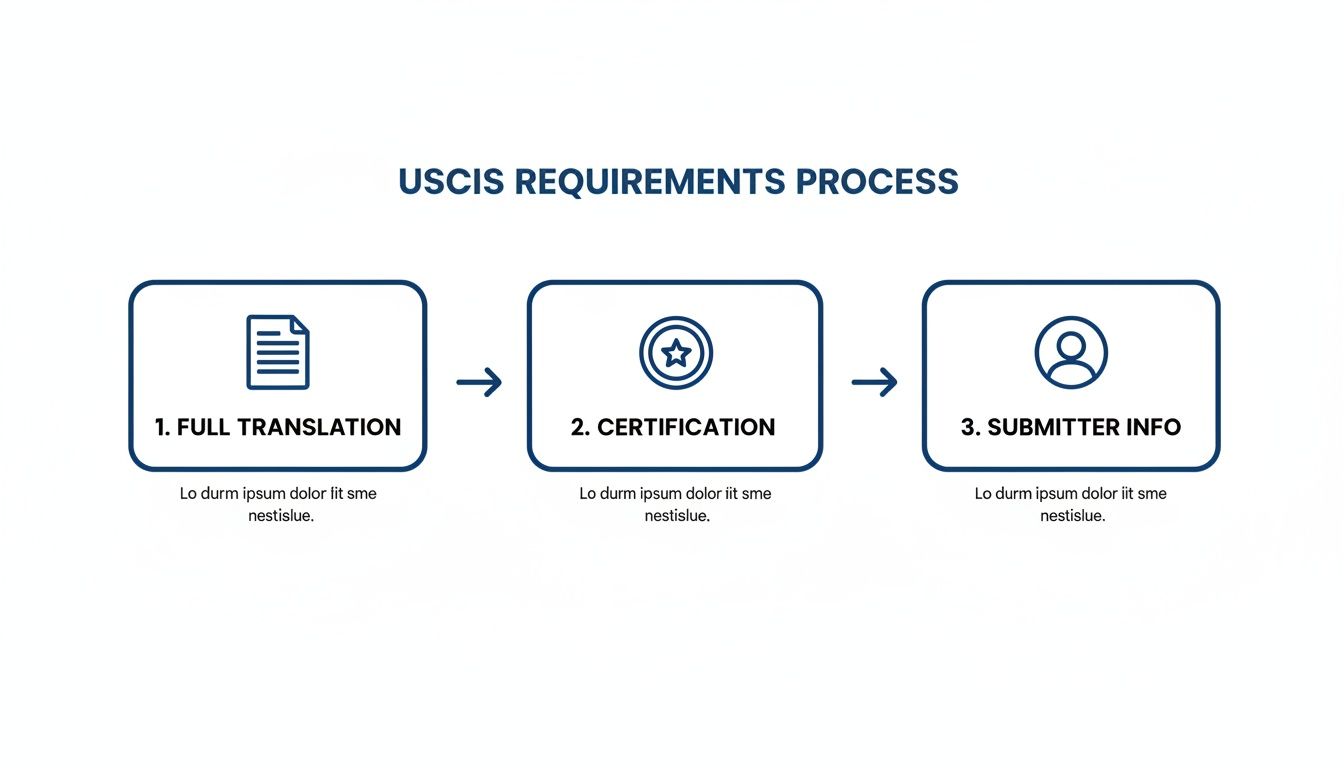
It always comes down to these three things: a complete translation of every word, a formal certification of accuracy, and clear details on who did the work.
What Happens on Our End
After you submit your document, it goes to a real, experienced human translator. This person is a native English speaker who is also an expert in the document's original language. This dual expertise ensures every seal, stamp, and bit of official jargon is translated perfectly while preserving its original meaning.
A Note from Experience: A professional translation isn't just swapping words. The translator carefully notes things like seals, signatures, and handwritten annotations. You'll see notations like "[Seal of the Civil Registry]" or "[Illegible signature]" in the final document, creating a true mirror image of the original in English.
Before the translation is sent back to you, it undergoes a quality check. A second linguist reviews everything—spelling, grammar, formatting, and dates—to catch any potential errors. This two-step verification process is what makes a professional translation so reliable.
Finally, we prepare and sign the Certificate of Translation Accuracy. This is the formal document that USCIS and other institutions require. It’s attached to your translation, and you receive the entire package as a digital PDF, ready to print and submit. To learn more about the expertise involved, see how our online certified translation service works.
Certification vs. Notarization: What's the Real Difference?
When preparing official documents, two words often cause confusion: certified and notarized. They sound similar but refer to completely different things. Understanding the distinction can save you time and money, especially when dealing with agencies like USCIS. For nearly all official submissions in the U.S., including immigration, you need a certified translation.
A certified translation is all about vouching for the accuracy of the translation itself. The translator or their agency attaches a signed statement, the "Certificate of Translation Accuracy," which confirms two things:
- The translation is a complete and accurate version of the original birth certificate.
- The translator is competent in both the source and target languages.
Think of it as a professional guarantee. The translation company puts its reputation behind the quality of the work.
So, What Is a Notarized Translation?
A notarized translation, on the other hand, has nothing to do with the quality of the translation. When a document is notarized, a licensed Notary Public simply verifies the identity of the person who signed the Certificate of Accuracy. They watch them sign, check their ID, and then add their own official stamp.
The notary's seal does not mean the translation is correct. It only confirms that the person who signed the certification is who they claim to be. The notary's job is to witness a signature, not to check the translation.
For most official needs within the United States, notarization is an unnecessary expense.
Knowing When You Need Each One
This is the key. For any application with U.S. Citizenship and Immigration Services (USCIS), a certified translation is a must-have. Notarization is almost never required. Adding a notary stamp to a USCIS submission won’t hurt your case, but it won't help either—it's just an extra cost for a service you don't need.
So, when does notarization matter? It typically comes into play for documents that are being sent out of the country. Some foreign universities, courts, or government agencies might request a notarized signature as an added layer of formality. This is often part of a more complex process of international document validation. If you're sending documents abroad, you might need to look into specific requirements for translation and apostille services.
The best advice is to always check the specific rules of the organization you're submitting to. If their instructions just say "certified translation," you can confidently skip the notary and focus on what truly matters: getting an accurate, compliant translation from a trusted professional.
Common Pitfalls and How to Avoid Them
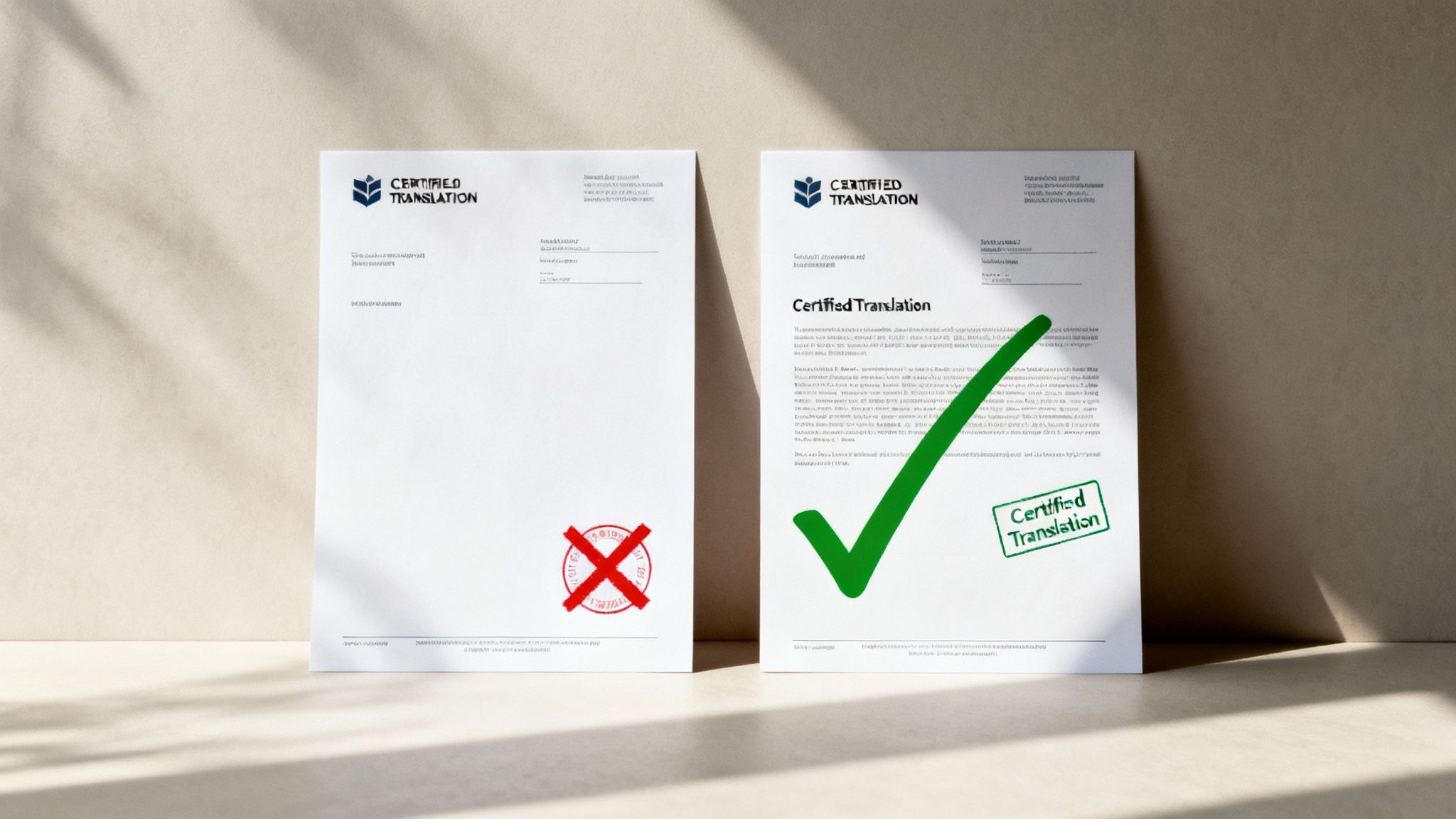
A small mistake on your translated birth certificate can cause a major headache. We've seen applications get stuck for months over simple, avoidable errors. Let's walk through the most common traps so your submission process is smooth and successful.
One of the easiest mistakes is submitting a partial translation. Remember, USCIS and other official bodies need a translation of everything on the original document. This includes every stamp, seal, and handwritten note in the margins, not just the main text.
Another classic mistake is asking a friend or family member for help. Even if they are perfectly bilingual, USCIS rules clearly state that the translation must be done by an impartial third party. This is non-negotiable and prevents any potential conflict of interest.
Navigating Mismatched Names and Faded Text
What should you do if names are spelled differently across your documents, or if your birth certificate is old and hard to read? These are common problems that can halt your application if handled incorrectly.
Name Variations: It is your responsibility to provide the translator with the official English spelling for every name, exactly as it appears on passports or other immigration forms. A professional translator will use that spelling and add a "translator's note" to explain any differences found on the birth certificate. This proactive clarification prevents confusion.
Worn or Damaged Documents: If your certificate is old, provide the clearest possible scan. A professional will transcribe what they can read and use a standard notation like
[illegible]for parts that are unreadable. This shows officials you are being transparent about the original document's condition.
My Two Cents: Never guess or try to fill in the blanks on a damaged document. The goal is a translation that is a mirror image of the original, flaws included. When it comes to USCIS, honesty is always the best policy.
The All-Important Certification Statement
This is a deal-breaker. A translation submitted without a proper Certificate of Translation Accuracy will be rejected immediately. It is an absolute requirement.
This certificate must be signed by the translator or a representative of the translation company. It also needs to explicitly state that the translation is complete and accurate and confirm that the translator is competent to translate from the source language into English.
As global mobility is expected to continue its upward trend into 2026, the need for accurate document translation will only grow. Market analysis shows the document translation services industry was expected to reach USD 44,562 million by 2025, with North America leading due to immigration. You can discover more insights about this growing market to understand why getting it right matters. Steering clear of these common mistakes is your ticket to meeting the strict standards set by official bodies.
Clearing Up Your Top Translation Questions
Even with a detailed guide, it's natural to have a few more questions. Let's tackle some of the most common things people ask about our birth certificate translation service so you can move forward with total confidence.
How Long Does a Birth Certificate Translation Take and How Much Does It Cost?
Time and cost are usually top concerns. A professional service should be transparent about both. For a standard document like a one-page birth certificate, you should expect to receive the finished, certified translation within 24 hours.
Pricing is typically just as straightforward. Most reputable agencies charge a flat fee per page, so you know the full cost upfront. No surprises. If you are facing a tight deadline, look for an expedited service option to get your translation precisely when you need it, removing the stress from last-minute submissions.
Can I Translate My Own Birth Certificate for Official Use?
The answer is a simple and firm no. Even if you are fluent in both languages, official bodies like USCIS have strict rules against self-translation. This rule also applies to family members, regardless of their language skills.
The reason is objectivity. USCIS and other institutions require an impartial, professional third party to perform the translation. This ensures the document is an unbiased and exact representation of the original. The translator or agency must then provide a formal Certificate of Translation Accuracy, which you cannot issue for yourself.
A Quick Reminder: The certification is a professional guarantee of accuracy and impartiality. Submitting a self-translated document is one of the quickest ways to have your application rejected.
What if My Original Birth Certificate Is Damaged or Unavailable?
This happens more often than you might think, especially with older documents. If your original is lost or destroyed, your first step should be to contact the vital records office in your country of birth to request a new certified copy.
If getting a new one is impossible, you may need to gather secondary evidence and submit a formal affidavit explaining exactly why the original document is not available.
If the document is just damaged or faded, do your best to provide the clearest possible scan or photo. A professional translator will meticulously translate every legible word. For any parts that are impossible to read, they will use standard notations like "[text illegible]" to show that the information was missing on the original. This is the professional way to handle it and demonstrates transparency to the receiving agency.
At TranslateDay, our goal is to make certified translations simple, fast, and reliable. Our expert translators are ready to handle your documents with the precision and care required for any official submission.
Get an instant quote and have your certified translation ready in 24 hours.